
Hot conditions are common during competitions and sporting events in the summer, making it essential for athletes to develop heat acclimation and preparation strategies to maintain performance in the heat. More recently, heat training has gained popularity among elite endurance athletes as a means of enhancing performance even in cooler and temperate conditions and the relevant research has provided promising results. This article explores the physiological rationale, current evidence and practical considerations of modern heat training to enhance performance in a temperate environment.
Performance Through Adaptation
When the body is repeatedly exposed to a sufficient heat stimulus, it adapts and becomes capable of performing better in the heat (i.e., acclimates).¹ You can read about the principles of heat acclimation and the resulting adaptations in more detail here.
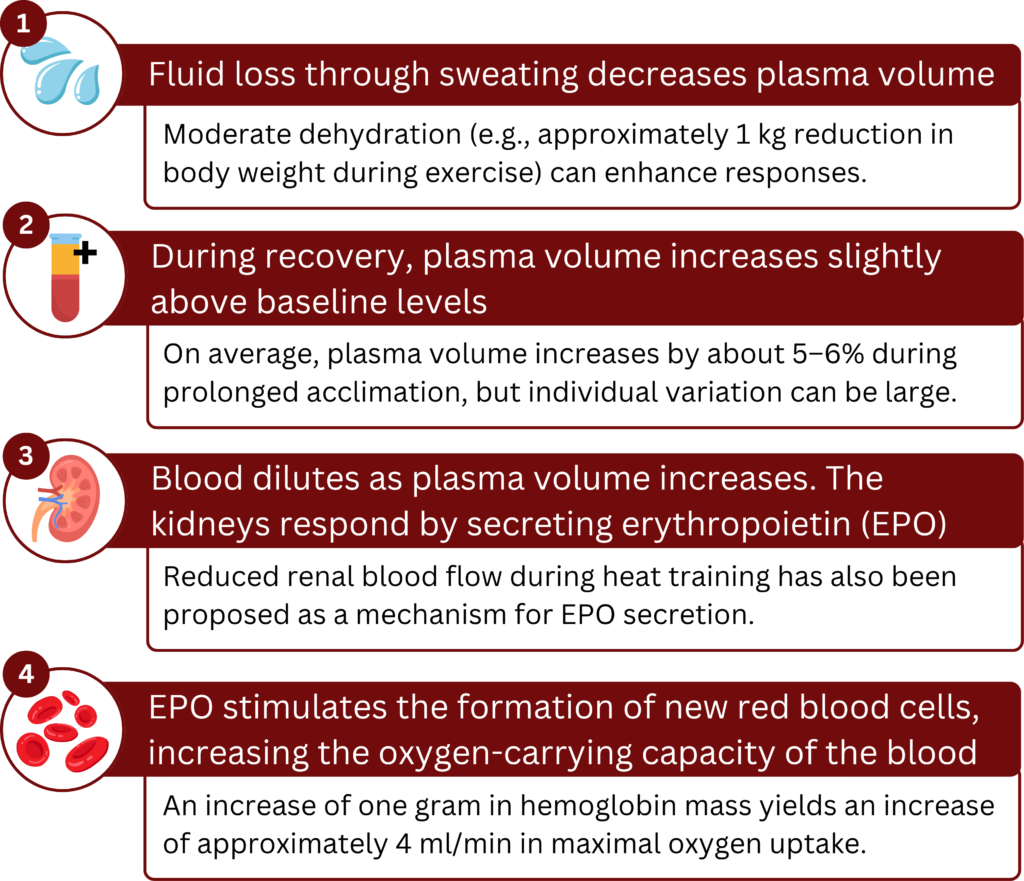
One key response to heat exposure is an increase in plasma volume, as in the heat a significant volume of blood is required for heat transport towards the skin to enable effective heat dissipation.1 While a single heat training session can decrease plasma volume due to heavy sweating, the body’s response to repeated heat exposure is to expand plasma volume by an average of about 5–6%.2 It has been suggested that as plasma volume increases with progressing acclimation, the blood dilutes and the proportion of red blood cells relative to blood volume (i.e., haematocrit) decreases. This is thought to trigger red blood cell production, increasing the total amount of haemoglobin and enhancing the blood’s oxygen-carrying capacity.4 Reported increases for haemoglobin mass have been approximately 2—5 %, and the response seems to be similar between male and female athletes15. This phenomenon has been compared to the responses of altitude training, where reduced oxygen availability and hypoxia-mediated signalling lead to increased red blood cell production.5
What are the performance benefits on heat training?
An increase of 1,8—4,7 % in haemoglobin mass is common responses following a prolonged period of heat training (table 1), and it has been estimated that a one-gram increase in haemoglobin mass increases maximal oxygen uptake by approximately 4 ml/min.10 This provides strong reason to assume that the observed changes in haemoglobin mass would also reliably lead to improved maximal oxygen uptake and endurance performance. However, as is common in most training interventions, these physiological changes may not always translate into improved performance.
Overall, however, the performance effects of heat training have been predominantly positive or neutral and increases in VO2max (3,6—4,2 %)9,15, velocity at VO2max (3,9 %)9, peak power during an incremental test (2,5 %)19, threshold power (3,2—4,6 %)15,16, and time trial mean power (4,4—6,2 %)15 have been reported alongside with null findings (table 1), suggesting that it can be a valuable addition to an athlete’s training toolkit. Importantly, heat training has not produced negative group effects on performance in the observed research literature.
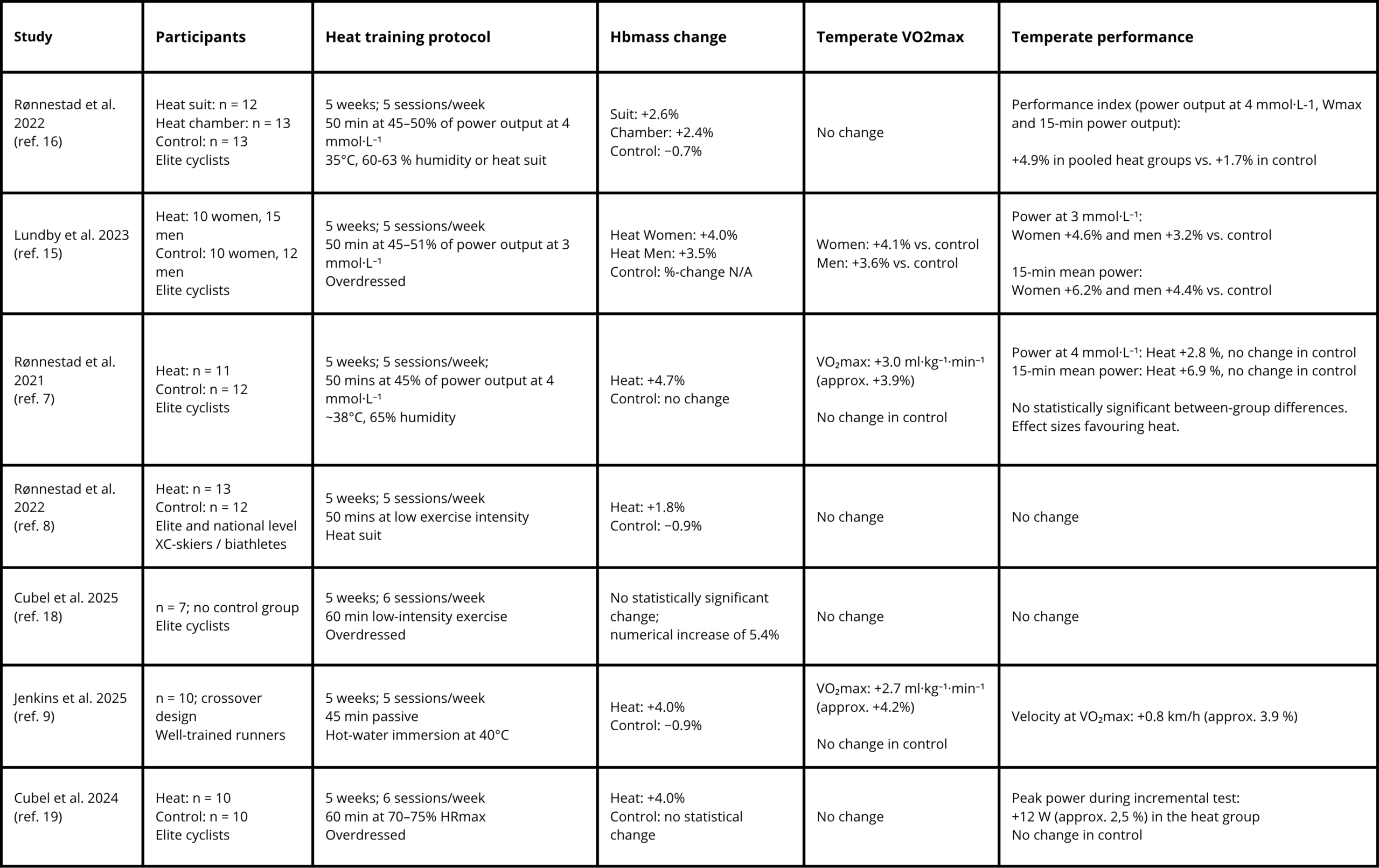
Table 1. A summary table of research on heat training protocols lasting 5—5½ weeks for haemoglobin mass and endurance performance. Click to enlarge.
Heat Training in Practice
What’s a heat block and what does the session include?
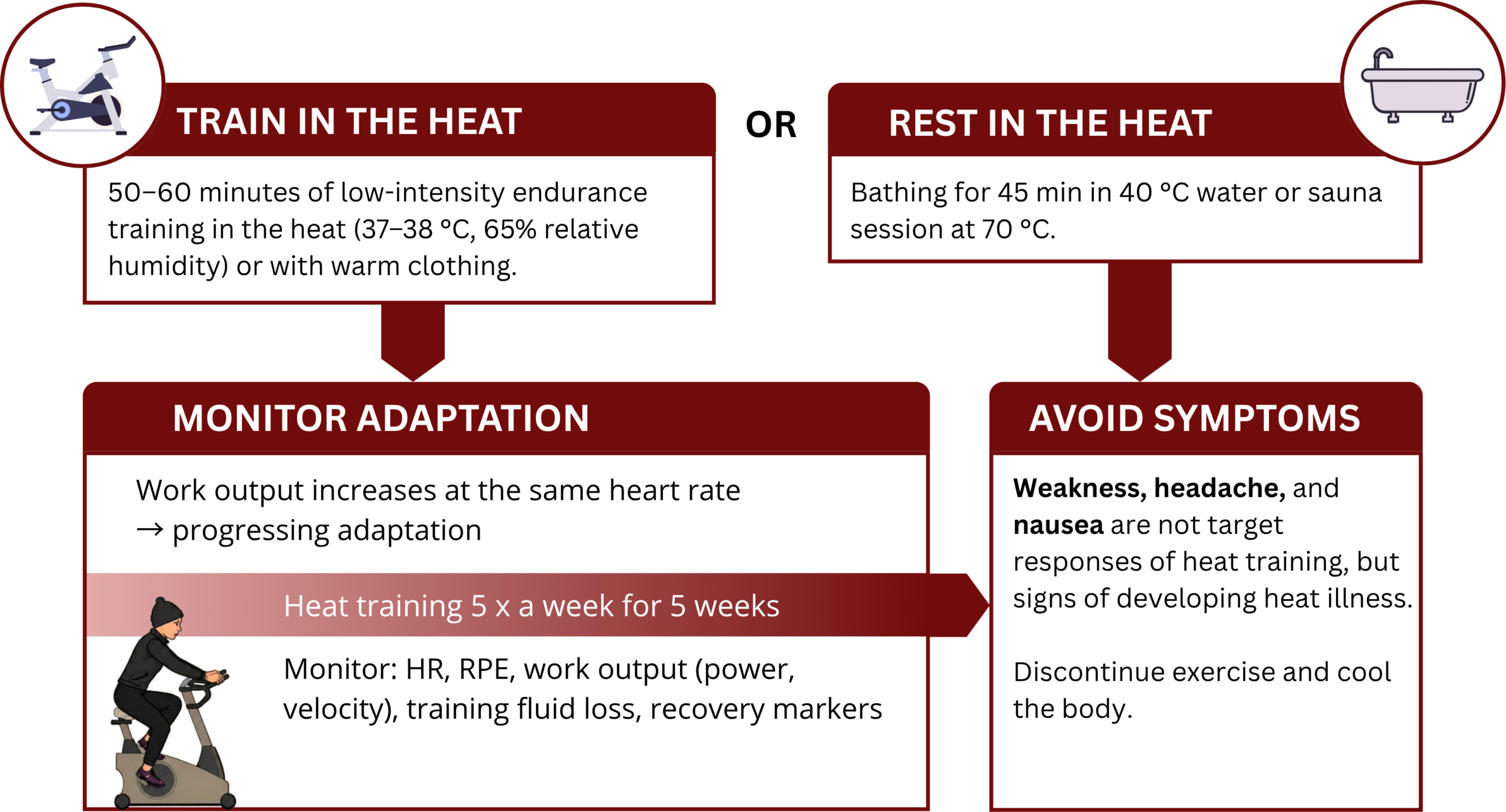
An evidence-based heat training program or a heat block consists of five heat sessions per week and lasts five weeks in total. The training program can combine active (heat exposure during exercise) and passive (heat exposure at rest) methods as needed, though active methods may be preferred. Active heat sessions are recommended to be performed at a low intensity as the secondary session of the day. For example, 60 minutes at around Z1—Z2 intensity in a heat chamber at 37–38°C and 65% relative humidity can yield favourable results.
However, training in such a controlled environment in an environmental chamber is often not possible, and extra layers of clothing have also been successfully utilized both in research and practice. When training at a normal room temperature (~20°C), a good starting point for clothing includes long underwear, a waterproof outer layer, a warm jacket, and headwear.8 Ultimately, the final choice of clothing depends on the prevailing environmental conditions and individual responses, according to which clothing can be adjusted. Passive methods can be carried out by using either a sauna or hot water immersion. Repeated sessions of 45 minutes in a 70°C sauna or in a 40°C bath is likely sufficient for adaptation to occur9.
Timing of the heat block
Heat blocks should be integrated strategically into an athlete’s annual plan and competition calendar. The off-season or general preparation period offers a great opportunity for a heat block, as lower baseline training demands make the added physiological stress more manageable. Importantly, heat training cannot simply be added on top of an existing program: other training elements must be adjusted or removed to accommodate the increased strain from heat training to avoid overtraining and maladaptation.
Another important consideration is the gradual decay of adaptations following the cessation of heat exposure. The increase in haemoglobin mass appears to diminish substantially after just two weeks without heat exposure.¹⁹ If the aim is to maintain these adaptations over a longer period, occasional maintenance sessions are necessary. Although the optimal frequency of heat exposure for maintaining haemoglobin mass and performance benefits remains unknown, evidence suggests that three weekly heat sessions may be sufficient to maintain haemoglobin mass.²⁰ The timing of the initial heat block and subsequent maintenance sessions should therefore be planned around the athlete’s most important competitions.
Monitor What You Can and What Is Relevant
Heat dose and exercise intensity
In research settings, a core temperature of 38,5 °C is commonly targeted.6 However, measuring core temperature is rarely done reliably in training conditions. Skin heat flux sensors, which have recently gained popularity among endurance athletes, may not accurately estimate core temperature during exercise in the heat. Studies have shown both overestimation¹³ and underestimation¹⁴ depending on the protocol used.
In practice heavy sweating and moderate thermal discomfort and unease, without actual symptoms of heat illnesses (e.g., headache, nausea), can be a valid method to assess the intensity of exposure. In addition, it is an excellent idea to monitor standard training variables such as heart rate, power/pace, and RPE during exposure. When heat training (active protocols specifically) is standardized to the same target heart rate or RPE (e.g., 70% of maximum HR or light perceived exertion) an increase in power/pace over the weeks is a sign of progressing adaptation, especially at the beginning of the training block.
Plasma volume and haematological adaptations
Responses in haemoglobin mass can potentially be enhanced by allowing a moderate dehydration during the session, as this strengthens the responses in the hormones regulating plasma volume.3 Weighing the body before and after exercise provides a partial picture of changes in plasma volume. If body weight does not decrease during heat training, the changes in plasma volume may remain unachieved.3,7 As a starting point, a weight loss of about 1 kg or <2 % body weight during exercise can be used to assess the effectiveness of the session. Fluid balance is swiftly restored after the session by consuming 150% of the lost fluid during the following hours.14 Importantly, weighing is done with minimal clothing and a dry body as sweat-soaked clothing distort the weight measurements.
While measuring haemoglobin mass can be done, it is rarely viable for coaches or athletes as it requires advanced techniques and equipment (e.g., the carbon-monoxide rebreathing method). It is important to realise that haemoglobin concentration or haematocrit, that are common measures of various blood panels, cannot be used to distinguish between successful and unsuccessful adaptation as they are influenced by both the changes in plasma volume and haemoglobin mass / red cell volume.
Adequate iron intake should be ensured during the heat block when aiming for a positive response in haemoglobin mass and blood oxygen-carrying capacity. Although research on iron intake specifically in the context of heat training is still scarce, iron plays a crucial role in the production of haemoglobin. Doses up to 100 mg of iron per day have been commonly used in research11 to ensure haematological adaptations.
Recovery
Heat is an additional physiological stressor, and the overall training load can increase during intensive heat training blocks, creating an additional challenge for recovery. If athletes adequately recover from this additional stress, positive changes in performance may result. However, the potential for excessive fatigue or overreaching exists. Monitoring recovery through subjective (e.g., questionnaires) and objective (e.g., HRV) measures and adjusting the overall training load during intensive heat training periods are therefore key priorities.
Whether you are looking to design, implement, or fine-tune an evidence-based heat training program tailored to your specific goals, our team at EP2 FINLAND can provide expert assistance in structuring active and passive heat protocols, monitoring physiological adaptation and recovery, and ensuring safe, effective execution.
Authors: Jere Borgenström, MSc; Esa Hynynen, PhD; Juha Peltonen, PhD, Adjunct Professor; Dominique Gagnon, PhD, Adjunct Professor
REFERENCES
- Périard, J., Eijsvogels, T., Daanen, H. 2021. Exercise Under Heat Stress: Thermoregulation, Hydration, Performance Implications, and Mitigation Strategies. Physiological Reviews 101, 1873—1979.
- McDonald, P., Brown, H.A., Topham, T.H., Kelly, M.K., Jardine, W.T., Carr, A., Sawka, M.N., Woodward, A.P., Clark, B. and Périard, J.D. (2025), Influence of Exercise Heat Acclimation Protocol Characteristics on Adaptation Kinetics: A Quantitative Review With Bayesian Meta-Regressions. Comprehensive Physiology, 15.
- Garrett, A. T., Goosens, N. G., Rehrer, N. J., Patterson, M. J., Harrison, J., Sammut, I., & Cotter, J. D. (2014). Short‐term heat acclimation is effective and may be enhanced rather than impaired by dehydration. American Journal of Human Biology, 26(3), 311–320
- Montero, D., Breenfeldt-Andersen, A., Oberholzer, L., Haider, T., Goetze, J. P., Meinild-Lundby, A.-K., & Lundby, C. (2017). Erythropoiesis with endurance training: dynamics and mechanisms. American Journal of Physiology-Regulatory, Integrative and Comparative Physiology, 312(6), R894–R902.
- Treff G, Sareban M, Schmidt WFJ. (2022). Hypoxic training in natural and artificial altitude. German Journal of Sports Medicine, 73: 112-117.
- Pryor, J., Johnson, E., Roberts, W., & Pryor, R. 2019. Application of evidence-based recommendations for heat acclimation: Individual and team sport perspectives. Temperature 6 (1), 37—49.
- Rønnestad, B. R., Hamarsland, H., Hansen, J., Holen, E., Montero, D., Whist, J. E., & Lundby, C. (2021). Five weeks of heat training increases haemoglobin mass in elite cyclists. Experimental Physiology, 106(1), 316–327.
- Rønnestad, B. R., Lid, O. M., Hansen, J., et al. (2022). Heat suit training increases hemoglobin mass in elite cross-country skiers. Scandinavian Journal of Medicine & Science in Sports, 32, 1089–1098.
- Jenkins ym. 2025 Long-term passive heat acclimation enhances maximal oxygen consumption via haematological and cardiac adaptation in endurance runners. J Physiol 0.0 (2025) pp 1–21. DOI: 10.1113/JP289874
- Prommer, N., Wachsmuth, N., Thieme, I., Wachsmuth, C., Mancera-Soto, E. M., Hohmann, A., & Schmidt, W. F. J. (2018). Influence of Endurance Training During Childhood on Total Hemoglobin Mass. Frontiers in physiology, 9, 251.
- Lundby, C. and Robach, P. (2026), Altitude or heat training to increase haemoglobin mass and endurance exercise performance in elite sport. J Physiol
- Brayden C. McLaughlin, Joseph T. Aguilera, Andrew C. D’Lugos. 2025. Validity of the CORE wearable sensor during constant-load cycling exercise in the heat. Journal of Thermal Biology, 132, 104241.
- Huijuan Xu, Yi Xu, Haojian Wang, Tze-Huan Lei, Faming Wang. 2025. Validity of the wearable CORE temperature sensor during 8-hour indoor heat exposure with and without electric fan use. Building and Environment, 282, 113288.
- Pérez-Castillo, Í. M., Williams, J. A., López-Chicharro, J., Mihic, N., Rueda, R., Bouzamondo, H., & Horswill, C. A. (2023). Compositional Aspects of Beverages Designed to Promote Hydration Before, During, and After Exercise: Concepts Revisited. Nutrients, 16(1), 17.
- Lundby, C., Hamarsland, H., Hansen, J., et al. (2023). Hematological, skeletal muscle fiber, and exercise performance adaptations to heat training in elite female and male cyclists. Journal of Applied Physiology, 135, 217–226.
- Rønnestad, B., Odden, T. U., Hamarsland, H., Hansen, J., Nygaard, H., Ellefsen, S., Hammarström, D., & Lundby, C. (2022). Heat training efficiently increases and maintains hemoglobin mass and temperate endurance performance in elite cyclists. Medicine & Science in Sports & Exercise.
- Oberholzer L, Siebenmann C, Mikkelsen CJ, Junge N, Piil JF, Morris NB, Goetze JP, Meinild Lundby A-K, Nybo L and Lundby C (2019) Hematological Adaptations to Prolonged Heat Acclimation in Endurance-Trained Males. Front. Physiol. 10:1379.
- Cubel, C., Klaris, M., Larsen, J. V., Faiss, R., Nybo, L., & Lundby, C. (2025). Haematological adaptations to high-altitude and heat acclimation training in elite male cyclists. Experimental Physiology, 111, 820–833.
- Cubel, C., Fischer, M., Stampe, D., Klaris, M., Bruun, T., Lundby, C., Nordsborg, N., & Nybo, L. (2024). Time-course for onset and decay of physiological adaptations in endurance-trained athletes undertaking prolonged heat acclimation training. Temperature, 11, 350–362.
- Rønnestad, B. R., Odden, I., Urionstad, T., Hansen, J., Mølmen, K. S., & Cardinale, D. A. (2024). Heat Suit Training Preserves the Increased Hemoglobin Mass after Altitude Camp in Elite Cyclists. Medicine & Science in Sports & Exercise, 57(1), 81–87.